REVIEW · ROVANIEMI
Night Snowshoeing Adventure under the Northern Lights
Book on GetYourGuide →Operated by Wild about Lapland · Bookable on GetYourGuide
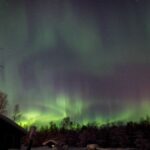
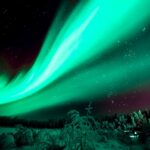
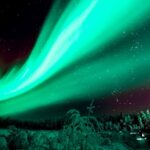
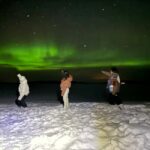
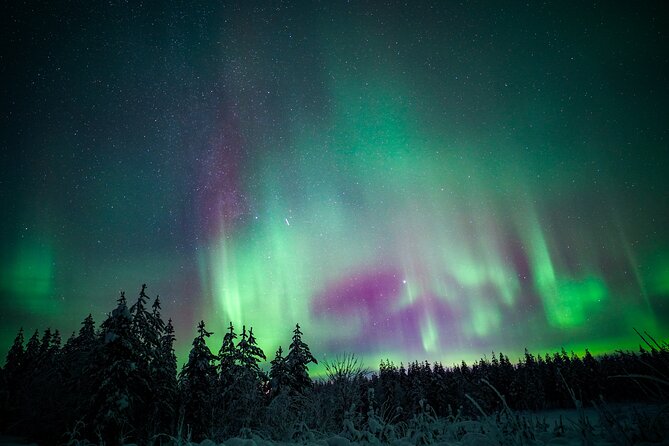
The Arctic feels bigger at night. This Lapland snowshoeing adventure turns the long darkness into a guided walk through winter woods, with snowshoeing and flint-and-steel fire skills built into the plan, plus time set aside to look for the Northern Lights if conditions allow. The one reality check: auroras are natural and not guaranteed on your specific night.
I like that the tour is designed around your group, not some rigid script. You’ll head out with a professional guide who matches the route and pace to your level, and you’ll get the full winter-gear package so you can focus on walking, spotting, and staying warm. If you’re expecting a guaranteed light show, build your plans around the experience itself, because the sky doesn’t always cooperate.
The best part for many people is how quickly the night stops being touristy and starts feeling like real Arctic life: cold air, quiet snow, and a warm campfire break in a kota along the way. One thing to keep in mind is that the total time outside vs. driving can vary a bit depending on where the guide sends the group, since you’re visiting the best possible area for your conditions.
In This Review
- Key things to know before you go
- What This 3-Hour Night Snowshoeing Actually Feels Like
- Choosing the Northern Lights Spot: Flexible and Weather-Dependent
- Small-Group Touring That Actually Changes Your Night
- The Midway Kota Campfire Break (and Why It Matters)
- Gear That Keeps You Enjoying the Walk
- Logistics From Rovaniemi: Pickup Rules and Real Timing
- Price and Value: Is $123 Worth It?
- Who Should Book (and Who Should Skip)
- When the Northern Lights Don’t Show Up
- Quick Practical Tips for Your Best Chance
- Should You Book Night Snowshoeing Under the Northern Lights?
- FAQ
- How long is the night snowshoeing adventure?
- What’s the chance of seeing the Northern Lights?
- Is pickup included from my hotel?
- What equipment is provided?
- What should I bring and what should I avoid?
- Is this tour suitable for kids or people with medical conditions?
Key things to know before you go
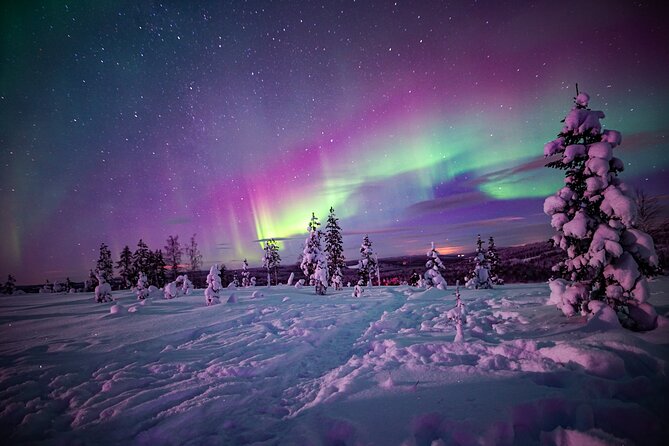
- Small groups up to 8 means more attention and better pace control on the snow.
- Snowshoes and winter overalls + boots provided, so you’re not gambling on rental quality.
- Your guide chooses the route (forest, frozen water, or a hill-top) to fit the group and the aurora odds.
- A mid-tour campfire snack break in a kota keeps the cold from taking over.
- Flint & steel fire-starting using natural materials is a hands-on, practical Arctic skill.
- Northern Lights chance, not a promise, because weather and sky conditions rule the outcome.
What This 3-Hour Night Snowshoeing Actually Feels Like
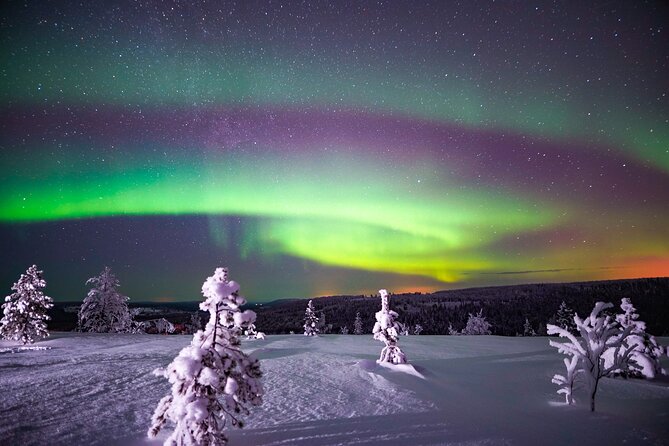
This is a short-but-intense Arctic evening: you’re out in the dark, moving steadily on snowshoes, then warming up by an open fire partway through. The “3 hours” matters because it shapes the rhythm. You won’t spend an entire night wandering, and you also won’t feel rushed through the cold. The guide’s job is to keep the group comfortable enough to enjoy the wilderness without burning everyone out.
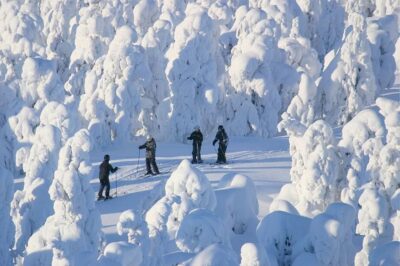
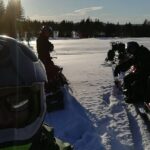
You’ll usually start with equipment and a quick fit-up. Then you move to the area where the guide thinks you’ll have the best combination of safe walking conditions and possible aurora viewing. Once you’re out there, expect a route that can include old forest paths, frozen rivers or lakes, and possibly a hill-top, depending on what works best for your group and the night.
Because it’s designed for groups that can be different in ability, you should think of this as guided walking with a purpose: get you into quiet winter terrain, then pause often enough to look up at the sky. The guide is also there to answer questions about Lapland and everyday life in the Arctic, and that tends to be part of what makes the trip feel more human than just scenic.
You can also read our reviews of more evening experiences in Rovaniemi
Choosing the Northern Lights Spot: Flexible and Weather-Dependent
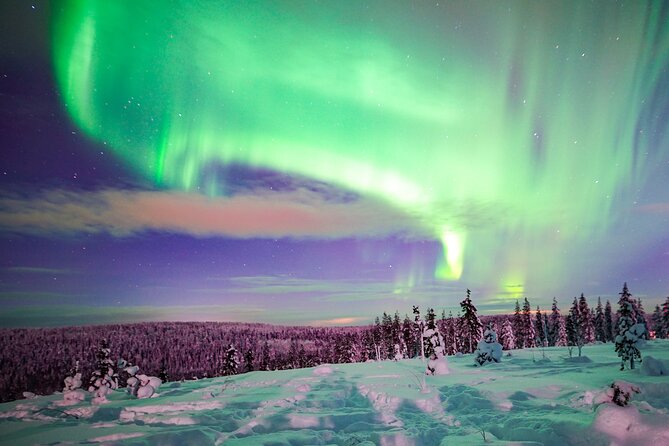
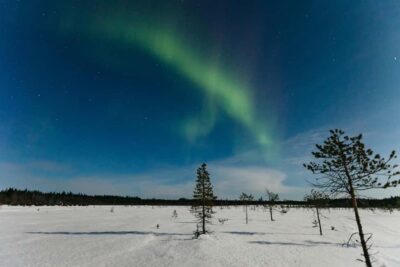
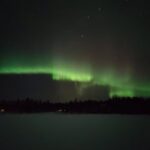
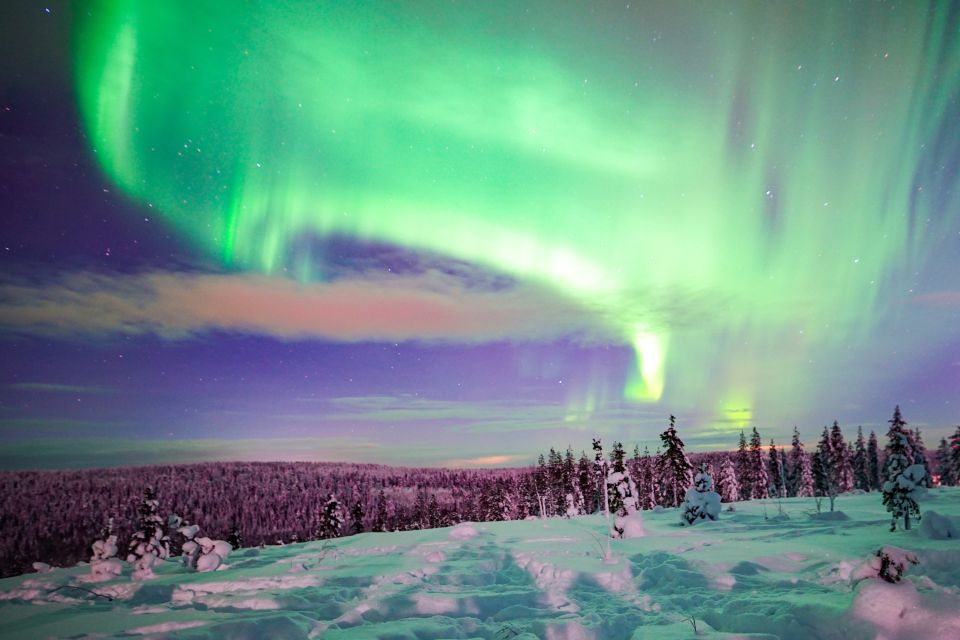
Here’s the honest deal: the Northern Lights are a natural occurrence, and you can’t count on seeing them clearly during your tour time. That doesn’t mean the evening is a waste. It means your guide has to play a practical game of probabilities.
The route choice is tied to two things at once:
- Group needs and comfort (how hard the walk should be, how quickly people can move)
- Aurora odds (where the sky view and conditions might be better)
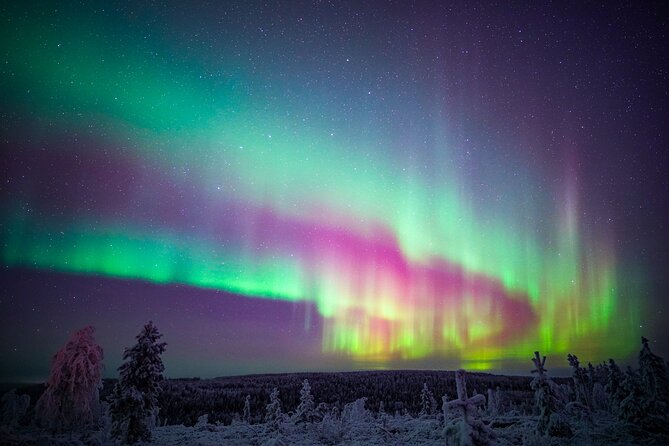
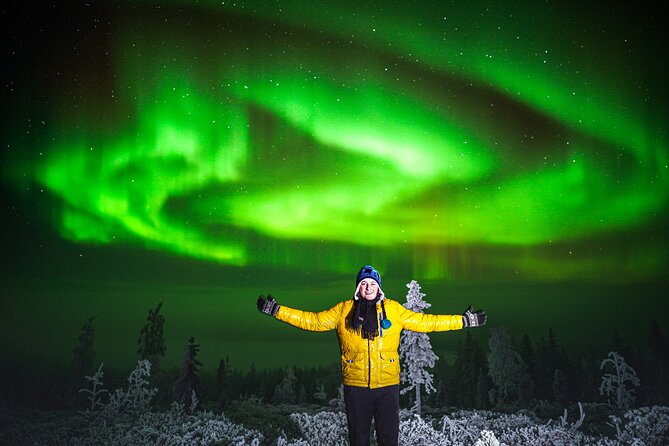
This is why one night can feel magical and another can feel more like a great snowshoe hike. Sometimes you might catch only a faint hint of color, and sometimes you might see more than you expected. Either way, the tour is built so you’re still doing something worthwhile even if the sky stays quiet.
One more point: your guide will likely keep scanning the sky throughout the walk, not just at one fixed moment. That’s a big difference from tours that only stop once. On nights when auroras appear briefly, timing matters, and the guide’s job is to notice and adjust when it happens.
Small-Group Touring That Actually Changes Your Night
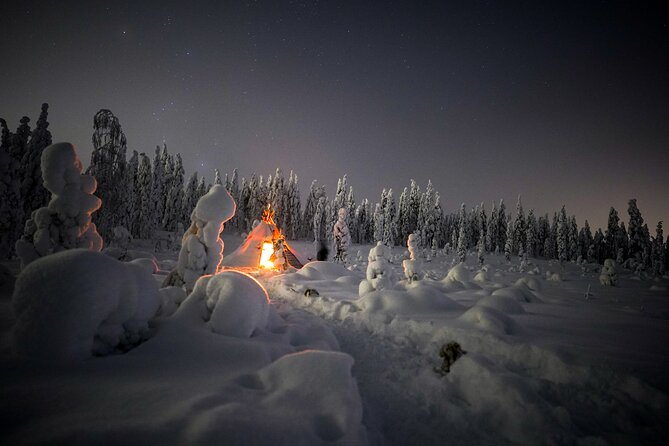
A max group size of 8 participants is a real advantage here. In winter, one slow step can ripple into delays, cold discomfort, and people spacing out. With a small group, the guide can:
- choose a pace that doesn’t leave anyone behind,
- keep the group together so you don’t miss viewing moments,
- explain and answer questions without the whole thing turning into a lecture.
You’ll also benefit from the guide adapting to the group level. That might mean a smoother route, fewer stops, or a slightly different plan for how long you walk before warming up. It’s not just “marketing wording.” In real snowshoe travel, adaptation is the difference between enjoying the night and counting minutes until your hands stop feeling normal.
One guide detail you’ll hear people mention is that they can be very talkative and information-focused. For example, a guide named Jordi has been praised for making the walk through the Taiga forest feel full of local context. That kind of guiding doesn’t replace the aurora; it makes the whole night better if the sky is only modest.
The Midway Kota Campfire Break (and Why It Matters)
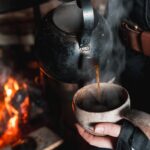
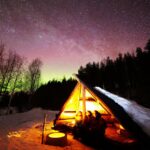
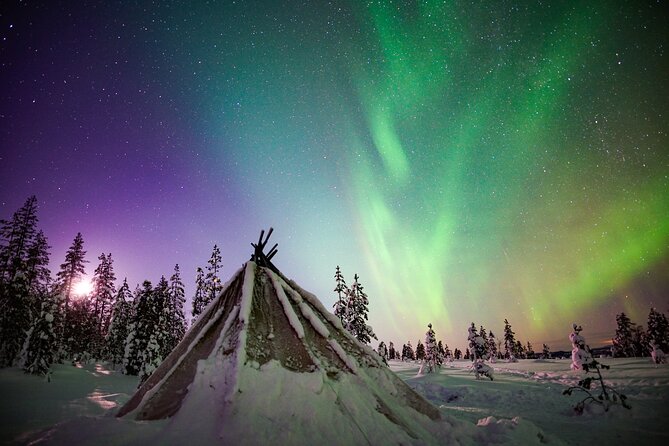
This tour has a classic Arctic rhythm: walk, then warm up. Midway through the snowshoeing, your guide lights a fire to provide refreshments and a typical Finnish campfire snack. This break is in a kota, which helps contain wind and gives you a place to relax with hot drinks before you head back out.
What I really like about this campfire stop is that it’s not only for convenience. Your guide shows how to build a fire using traditional methods with flint & steel and natural materials you can find nearby. The impressive part is that it’s meant to work even in extreme cold. You won’t just be told what to do; you’ll watch the process and learn why it works when matches and lighters might fail you.
It also turns your guide into a real storyteller. You’ll have time to ask questions about Lapland, life in the Arctic, and what daily winter actually looks like beyond the holiday photos. For many people, that conversation is the best part of the tour, because it makes the night feel grounded.
A practical note: in some situations, the exact balance of time can shift. If the pickup-to-site drive is longer or the route is shorter than expected for that group, the walk portion can feel brief compared with the total time. The campfire break usually helps offset that, but it’s smart to go with the mindset of a guided Arctic experience overall, not a long hike.
Gear That Keeps You Enjoying the Walk
One of the best value points here is that the essentials come included:
- snowshoes,
- professional winter overalls and boots,
- and equipment for the activity.
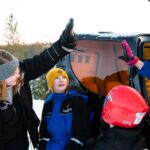
That matters because winter gear can make or break your comfort. When you’re cold, everything slows down: you walk less confidently, your viewing suffers, and your enjoyment drops. Having proper outer layers and boots provided reduces the chance that you’ll arrive underdressed.
You still need to bring:
- water, and
- warm clothing.
Water sounds boring until you’re out in freezing air. Your body still needs hydration, and the cold makes you feel “fine” even when you’re not. Bring a bottle you can keep easy to access.
Also, plan for a night in serious cold. Cold weather clothing will be provided, but the experience still requires a certain amount of endurance. If you’re unsure how your body handles cold, treat this as an active outdoor event, not a casual stroll.
And there’s a clear rule: alcohol and drugs aren’t allowed. That’s not a buzzkill; it’s for safety and for keeping everyone alert on snow and ice.
Logistics From Rovaniemi: Pickup Rules and Real Timing
Most people base a trip like this on where they’re staying. Pickup is included for accommodations outside the city center, with an extra surcharge if you’re staying 10 kilometers or further from the center. If you’re staying in the city center, you’ll start from the office instead of getting picked up.
That detail matters because it changes how smoothly the evening starts. If you’re walking to the meeting point, give yourself extra buffer time so you’re not scrambling in the cold. If you’re being picked up, be ready for the total experience time to include transportation. Even if your “snowshoeing” portion doesn’t feel like hours and hours, the tour still covers getting you into the right winter area and back.
Also, the tour operates in any weather conditions. In other words, you’re not choosing between snowshoeing and cancellation because the forecast looks sketchy. You’re choosing between a sky show and a great winter walk. Either way, you’ll be outside.
Price and Value: Is $123 Worth It?
At $123 per person for a 3-hour experience, you’re paying for a lot more than a walk with a flashlight. The value comes from the full package:
- a professional guide,
- transportation,
- snowshoes and winter overalls + boots,
- campfire snacks and hot drinks,
- and taxes and fees included.
Small group size is part of that value equation too. With fewer people, you get more flexibility and more attention, which is especially important in cold-weather group travel where safety and pace matter.
So ask yourself what you want from Lapland in winter. If you want a hands-on Arctic night with guidance, warm hospitality, and realistic aurora-chasing, this pricing can make sense. If what you really want is the longest possible snow time or a guaranteed light show, you might feel a mismatch. But if you treat the Northern Lights as bonus power and the snowshoeing + fire + stories as the main event, the cost lines up with what you’re getting.
Who Should Book (and Who Should Skip)
This is not a one-size-fits-all winter activity. It’s not suitable for children under 10, and it’s not recommended for people with heart complaints or other serious medical conditions. The cold, the endurance component, and the nature of nighttime walking all add up.
If you’re generally comfortable outdoors in winter and you can handle active cold-weather movement, you’ll likely enjoy this. You should also be okay spending part of the night outside looking up at the sky. That’s a big part of the experience even when the auroras are faint.
One more “fit” check: you’ll be in a small group, and the guide will adapt the route. Still, the trip is designed to get you moving. If you want a completely seated or slow, stop-and-go experience with no exertion at all, this may feel too physical.
When the Northern Lights Don’t Show Up
Let’s plan for the night you don’t get much sky drama. Even then, you’re still getting:
- snowshoe walking in Arctic nature,
- time outside in the dark (which many people love for the quiet feel),
- warmth and food at a campfire,
- and a guide who explains what you’re seeing and experiencing.
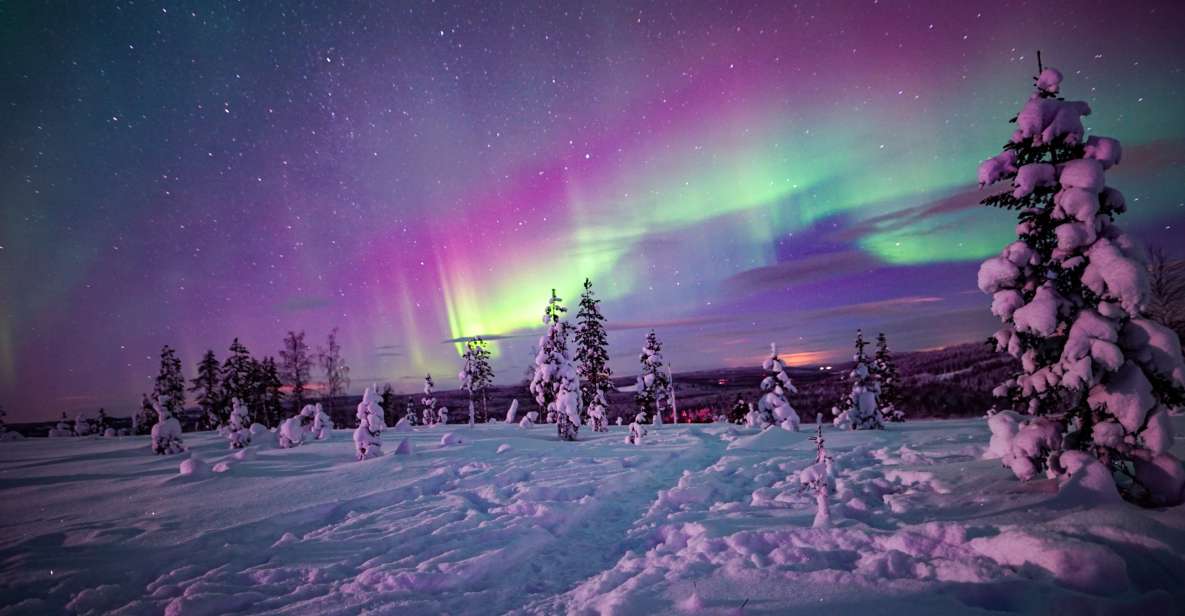
Some nights can deliver only a small aurora glimpse. Other nights might be more silent. Either way, the best way to enjoy the tour is to treat it like a real winter adventure first, and auroras second.
That mindset also keeps you from feeling disappointed. The guide’s route choice is meant to improve your odds, but it can’t force a color display in the sky.
Quick Practical Tips for Your Best Chance
These aren’t “guarantee the aurora” tricks, because nobody can. But they help you enjoy the night more:
- Bring warm clothing even though winter overalls are provided. Layering is your friend.
- Drink water beforehand and bring a bottle.
- Plan to stay patient. The sky can shift quickly, and scanning takes a calm mind.
- If you feel you’re getting cold or tired, tell the guide early. In small groups, adjustments are easier.
And for the campfire moment: listen closely to the flint-and-steel explanation. Even if you never try it yourself, it’s one of the best ways to understand what makes survival skills practical in extreme cold.
Should You Book Night Snowshoeing Under the Northern Lights?
Book it if you want a true Arctic night that mixes outdoor adventure with warm, local-style hospitality. The small group cap, the included snowshoe and cold-weather gear, and the campfire kota break with flint-and-steel fire-starting make this more than just aurora hunting.
Skip or reconsider if you’re chasing a guaranteed light show. You’ll still enjoy snowshoeing in winter, but the Northern Lights cannot be promised. Also pass if you have heart problems or serious medical conditions, or if you’re traveling with children under 10.
If you’re staying in Rovaniemi city center, start by confirming where you’ll meet (the office pickup rules differ). Once that’s sorted, you’re set for a focused three hours in the wilderness, with warmth and a bit of Lapland knowledge built into the experience.
FAQ
How long is the night snowshoeing adventure?
The tour lasts 3 hours.
What’s the chance of seeing the Northern Lights?
There is a good chance the guide can observe the Northern Lights if they appear, but visibility is not guaranteed because it depends on natural conditions.
Is pickup included from my hotel?
Pickup/drop-off is included for accommodations outside the city center. If you’re staying 10 kilometers or further from the center, there is an extra surcharge. If you’re staying in the city center, you’re asked to walk to the office to start the tour.
What equipment is provided?
The tour includes snowshoes, professional winter overalls, and boots.
What should I bring and what should I avoid?
Bring water and warm clothing. Alcohol and drugs are not allowed.
Is this tour suitable for kids or people with medical conditions?
It’s not suitable for children under 10. It’s also not recommended for people with heart complaints or other serious medical conditions.