REVIEW · ROVANIEMI
Ice fishing program in Lapland
Book on GetYourGuide →Operated by Lapland Camp Luxury Choice · Bookable on GetYourGuide
Winter silence has a way of resetting you. This Lapland ice fishing program turns a frozen lake visit into something you can actually learn, not just watch. I especially like the mix of hands-on time (drilling and trying your luck) plus a proper break by the birch-wood open fire with warm blankets.
One thing to plan for: it’s outdoors the whole time, so cold is part of the deal, and catching fish is never guaranteed.
In This Review
- Key things to know before you go
- Ice fishing in Lapland: why it feels special
- Getting to Palojärvi: the hotel start and the short winter transfer
- Your 3-hour flow: from drilling a hole to sitting by the fire
- Step 1: Palojärvi stop for photos and a guided start
- Step 2: Learn how to make the hole in the ice
- Step 3: Ice fishing time with your provided gear
- Step 4: Warm up by the birch-wood open fire
- Step 5: Food and drinks break in the winter
- Step 6: Wrap-up and return to the hotel
- What you actually learn (beyond just sitting at a hole)
- The winter comfort details that make this work
- Warmth plan: blankets + fire
- Food that fits the pace
- Photos without stress
- Price and value: is $103 worth 3 hours?
- What to bring (so you don’t hate the cold)
- Who this is perfect for—and who should skip it
- The main risks: cold comfort and fish that may not cooperate
- Should you book this Lapland ice fishing program?
- FAQ
- How long is the ice fishing experience?
- Where does the tour start and end?
- Is there an English-speaking guide?
- What’s included in the price?
- What food and drinks are provided?
- What should I bring with me?
- Who isn’t the tour suitable for?
Key things to know before you go
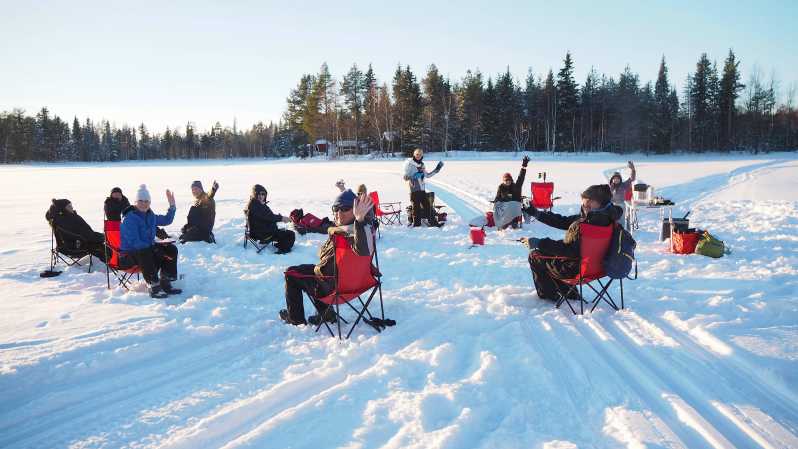
- Hands-on ice fishing with an English-speaking guide, including how to make a hole in the ice
- Warmth built into the schedule, with an open fire and blankets so you’re not stuck shivering
- Comfort-food break in the winter, with a salmon sandwich and berry juice after you get set up
- Great for families and teams, since it’s educational and relaxed rather than rushed
- Photo opportunities during the Palojärvi stop, plus plenty of time just to soak in the winter scene
- Cold-weather reality check: you’ll want serious gloves and outdoor layers, even if you’re only out for a few hours
Ice fishing in Lapland: why it feels special
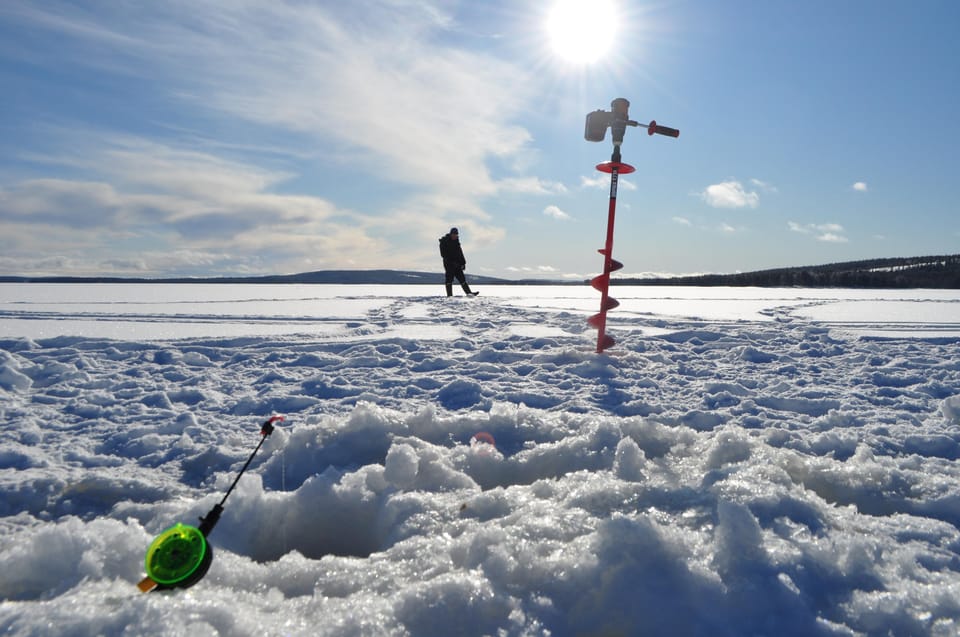
Ice fishing sounds simple until you’re standing on real winter ice. Then you notice the big differences: the air feels sharper, sound carries differently, and everything slows down. That’s the point. This tour is designed around the quiet rhythm of the lake—walk out, get set, learn the basics, then wait by the hole while the landscape does its thing.
You’re not just paying to stand in the cold. You’re getting a guide who helps you understand the activity as locals do it in winter. The tour also keeps things human-scale: you drill your own hole, try fishing with the gear provided, and take time to warm up and reset.
And yes, the “learn + relax” formula matters. When a winter activity only has one mode—either total adrenaline or total waiting—it can get frustrating fast. Here, the built-in open fire and warm breaks keep it comfortable, so you can actually enjoy the experience.
You can also read our reviews of more tours and experiences in Rovaniemi
Getting to Palojärvi: the hotel start and the short winter transfer
The program is built around an easy hotel-to-lake flow. You start from the Rovaniemi hotel area (the meeting point is listed as the city center hotel called City Hotel), and you’ll return to your hotel after the activity. Some schedules also reference the Arctic City Hotel as the starting point, so I’d treat your booking details as the final word on where you’ll actually meet.
You’re in the field for about 3 hours total, which is ideal if you want a true outdoor activity without losing an entire day. It also means the timing stays tight: you’ll get to the frozen lake, do the ice fishing part, and have your warmth-and-food break without dragging.
Practical note: for a short trip like this, your clothing matters even more than usual. If your gloves are wrong or your shoes aren’t warm enough, you’ll feel it quickly.
Your 3-hour flow: from drilling a hole to sitting by the fire
Here’s how your time on the ice typically plays out, with the stops kept simple and focused.
Step 1: Palojärvi stop for photos and a guided start
Once you arrive, you’ll have time for a photo stop and a guided tour. This is where the guide sets expectations and shows you what you’ll do next—how the ice-fishing setup works and what to pay attention to.
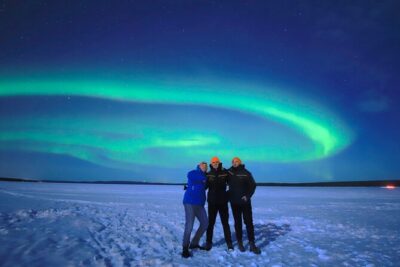
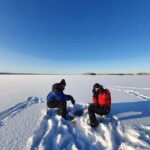
You’ll also get some free time and a walk, so you’re not just stuck at one spot. In a place like Lapland, that walking time can turn into your best memory: flat snow, long shadows, and a lake that feels huge because it’s frozen and still.
Step 2: Learn how to make the hole in the ice
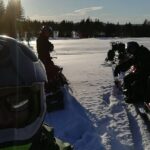
This is the hands-on centerpiece. The guide teaches you how to make a hole in the thick ice, and then you’re ready to fish.
Even if you’ve never tried ice fishing before, this step is doable—because you’re not guessing. You follow the guide’s lead, you get the gear, and you learn the basic workflow right there on the ice.
Step 3: Ice fishing time with your provided gear
After the hole is ready, you fish. The tour includes fishing gear, so you don’t need to rent or bring your own.
The most important mindset here is patience. Ice fishing is not a fast activity. It’s closer to winter mindfulness with a chance of action at the hole. If you’re going as a family, that waiting period can actually be a benefit, because the group stays together and the guide keeps things moving with advice.
Also, keep expectations realistic: there are no guarantees. One older experience highlighted that sometimes you don’t land fish, and that doesn’t make the day a failure—you still get the full winter learning and the outdoor calm.
Step 4: Warm up by the birch-wood open fire
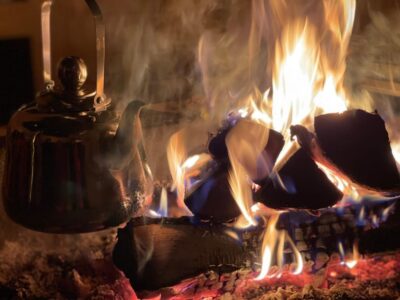
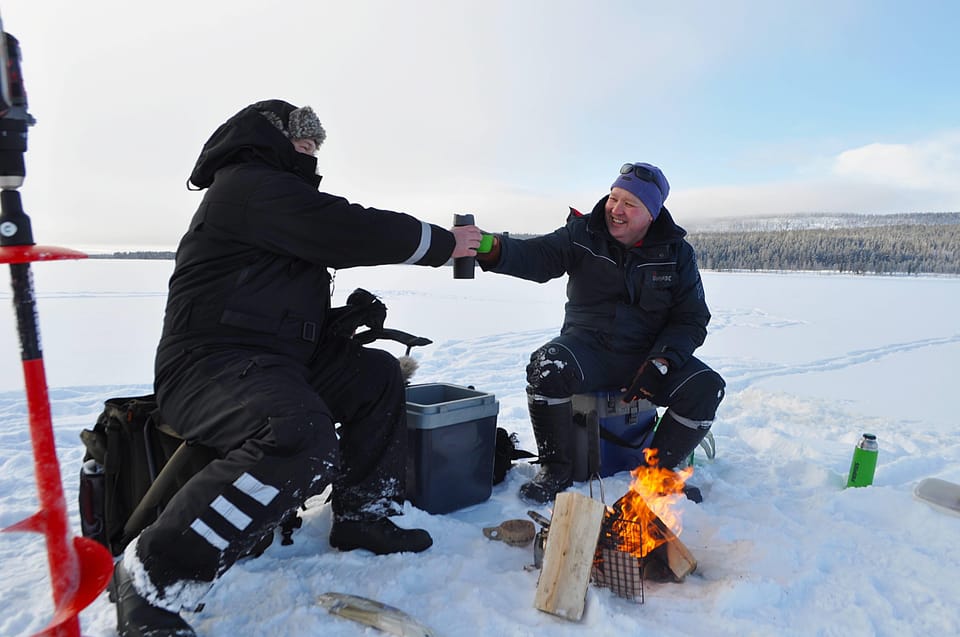
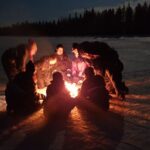
This tour does warmth the right way. Your guide makes the fire with birch wood, and you can stay close to it to warm up. You also have warm blankets, which help a lot when the cold starts creeping in.
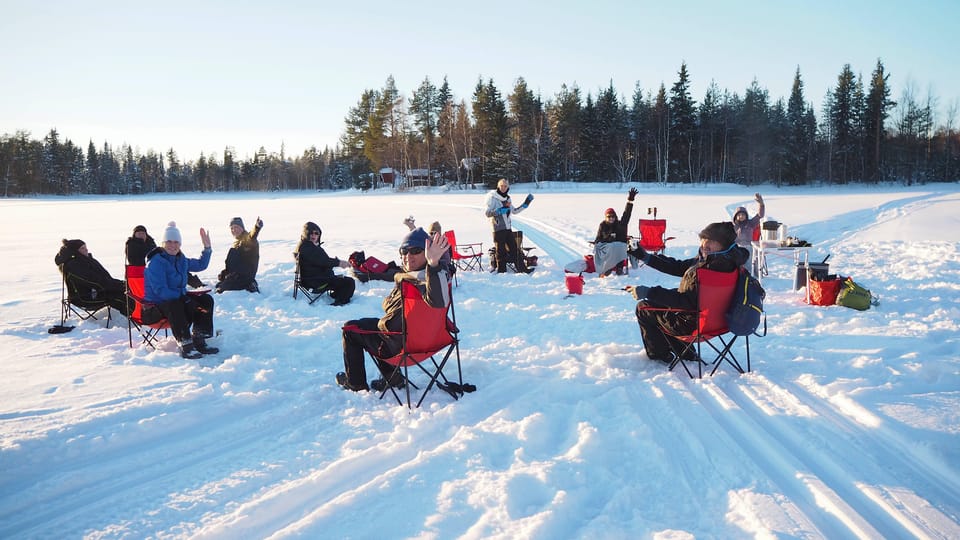
This fire-and-blanket setup is what turns the tour from a survival test into a relaxing winter outing. It also creates the social moment: the group clusters together, people ask questions, and you get a break that doesn’t feel rushed.
Step 5: Food and drinks break in the winter
After you’ve had your fishing time, you get a meal and hot drinks. The program includes:
- a salmon sandwich
- a cup of berry juice
- and open-fire comfort time near the fire
In at least one experience, the warm setup included grilled items and tea as part of the fire-time atmosphere. Even if your exact food details vary by day, the core idea stays the same: you’ll have a warm, simple meal that fits the environment.
Step 6: Wrap-up and return to the hotel
When the session ends, you head back to the hotel drop-off. Because the total time is just 3 hours, it usually feels like a focused burst rather than a full-day commitment.
What you actually learn (beyond just sitting at a hole)
The best part of a guided ice fishing tour is that you’re not stuck with a bag of gear and zero clues. Here, the guide teaches you how to make a hole and shares ice-fishing tips while you fish.
You’re also likely to learn small practical things that you’d never pick up on your own, like:
- what the guide wants you to do during setup
- how to handle the process step-by-step without wasting time
- how to pay attention during the fishing period
And because this is an English-language tour, you can ask questions easily. Some guides have been particularly strong at this. One experience referenced a guide named Alex, known for friendly conversation, answering lots of questions, and even taking photos for the group. That kind of “make it feel easy” guiding style matters in a cold-weather setting.
The winter comfort details that make this work
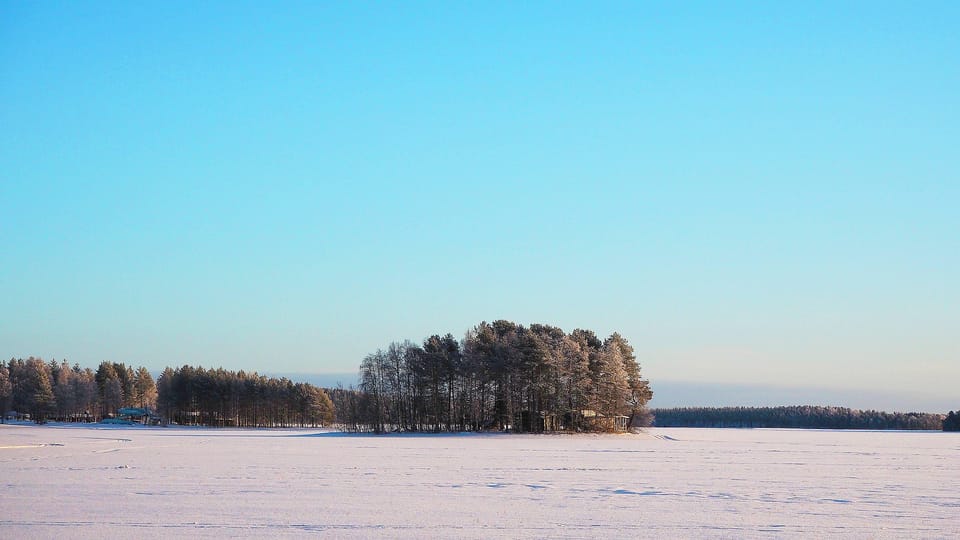
Many cold tours fail on comfort. This one tries to solve it with several built-in helpers.
Warmth plan: blankets + fire
You’re not expected to tough it out. Warm blankets and an open fire are part of the structure, and the guide makes the fire using birch wood so you can stay close.
In practice, that means you can take a break the moment you need it, rather than waiting for the group to finish. For families and anyone who gets cold faster, that’s a big deal.
Food that fits the pace
The salmon sandwich and berry juice aren’t fancy, but that’s not the goal. The goal is steady energy for cold air and a meal that doesn’t slow the group down.
If you’re thinking about kids: this kind of simple, warm food plus a fire-side hangout tends to land well. One experience specifically mentioned a child having a great time while the guide stayed attentive and supportive.
Photos without stress
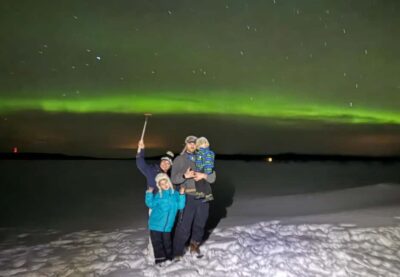
There’s a photo stop during the Palojärvi segment, and guides also take photos for guests. When you’re in a snowy place that looks unreal, it’s easy to miss the moment while you’re busy focusing on the fishing. Having photo help saves you from that.
Price and value: is $103 worth 3 hours?
At about $103 per person for 3 hours, the value depends on what you count as important.
What you do get for the price:
- transport to and from the lake area
- an English-speaking guide
- fishing gear
- warm blankets and an open fire experience
- food and beverages (including the salmon sandwich and berry juice)
- time built into the schedule for photos, walking, fishing, and relaxing
What’s not included: restaurant food.
Here’s how I’d think about it. If you had to build this day yourself, you’d likely pay separately for gear, a guide, a safe setup, and transportation—plus you’d still have to solve the cold-comfort factor on your own. For many people, the “guided + gear + warmth + food” combo is exactly why this costs what it costs.
Still, I’ll be honest: if your goal is only to catch fish fast, you may feel the price is high for what’s essentially a relaxed winter activity with uncertainty. If your goal is the experience—learning, scenery, calm outdoors, and warmth built in—then it usually feels fair.
What to bring (so you don’t hate the cold)

This is a winter ice activity. Dress like cold is already winning.
Bring:
- comfortable shoes
- comfortable clothes
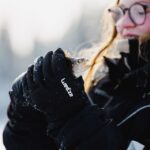
- gloves
- outdoor clothing (the kind you’d actually wear in deep winter)
- personal medication
And plan for layers. You want warm insulation, plus room to move when you’re drilling, walking, and standing around the fire.
Also, the activity notes that alcohol and drugs are not allowed. So if you’re tempted to turn it into a party, skip that plan and treat it like a clean outdoor program.
Who this is perfect for—and who should skip it
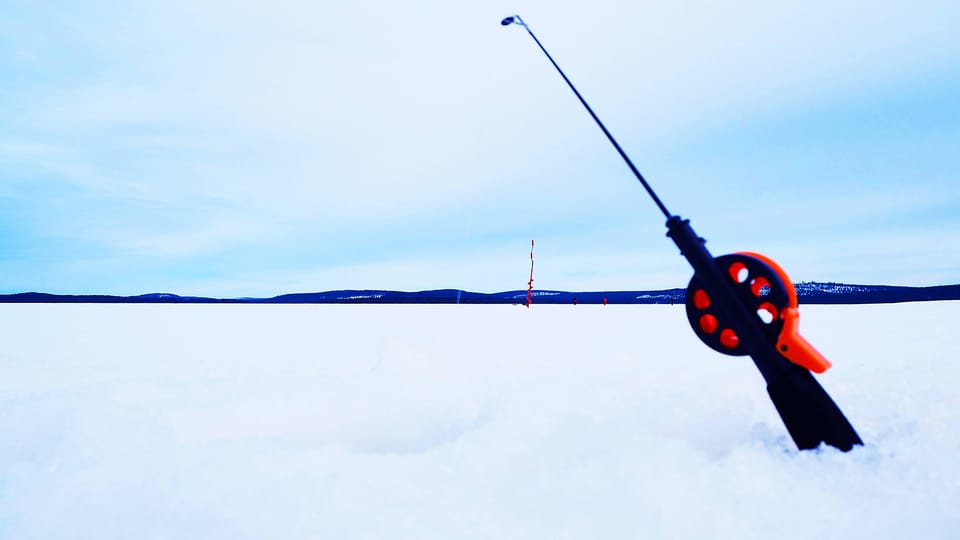
This tour is especially well suited for:
- families who want a winter activity that’s educational and not just sightseeing
- people looking for a relaxed outdoor day with real structure
- groups who want team-building in a setting where everyone does the same simple steps and shares warmth by the fire
You’ll also like it if you value calm. Ice fishing days can be surprisingly peaceful.
But it’s not for everyone. The program is not suitable for:
- pregnant women
- people with back problems
- people with mobility impairments or wheelchair users
- people with heart problems
- people with epilepsy
- people with a cold
- people with food allergies or gluten intolerance
- people with pre-existing medical conditions
- people with recent surgeries
- babies under 1 year
- people with insect allergies
If you’re unsure where you fit, it’s worth checking directly before booking.
The main risks: cold comfort and fish that may not cooperate
There are two practical things that can make or break your day.
First: cold. Even with blankets and a fire, you’ll still spend time outside. One experience noted that it can get quite cold and strongly advised dressing very warmly. My advice matches that: bring the gear that keeps your hands and feet comfortable first.
Second: fish. One older experience said they didn’t catch fish and felt the day was too commercial. That complaint isn’t the norm for the overall vibe, but it does highlight the real truth: ice fishing is not guaranteed.
If you accept that you’re paying for the guided winter experience—not a guaranteed catch—you’ll enjoy it much more.
Should you book this Lapland ice fishing program?
If you want a short, guided winter outing in Lapland with real hands-on ice fishing basics, warmth built in, and food that fits the moment, I think this is a solid choice.
Book it if:
- you like the idea of drilling a hole and trying fishing rather than just watching
- you want a calm, family-friendly outdoor experience
- you’re traveling with a group and want a structured activity that feels shared
Skip it if:
- you can’t handle cold outdoor time even with blankets and a fire
- you need guaranteed fish on the line
- any of the listed medical or health constraints apply
If you’re excited about Lapland winter life and you want the day to feel safe, guided, and genuinely outdoorsy, this is the kind of experience that makes the trip feel real—without needing a whole day plan.
FAQ
How long is the ice fishing experience?
The duration is 3 hours.
Where does the tour start and end?
It starts at the central hotel area in Rovaniemi (listed as City Hotel) and returns to the hotel area afterward. Some schedules also reference Arctic City Hotel as the starting point, so confirm the exact pickup location in your booking.
Is there an English-speaking guide?
Yes. The tour includes an English-speaking guide.
What’s included in the price?
Transport, an English-speaking guide, food and free time, warm blankets, fishing gear, beverages, and an open fire.
What food and drinks are provided?
You get a salmon sandwich and beverages, including berry juice. Open-fire time includes warm relaxation by the fire.
What should I bring with me?
Bring comfortable shoes, comfortable clothes, gloves, outdoor clothing, and any personal medication you need.
Who isn’t the tour suitable for?
It isn’t suitable for pregnant women, people with back problems, mobility impairments, wheelchair users, heart problems, epilepsy, people with a cold, people with food allergies or gluten intolerance, people with pre-existing medical conditions, people with recent surgeries, babies under 1 year, or people with insect allergies. Alcohol and drugs are not allowed.